Materials Testing Solutions
For Plastics and Elastomers

  • Made in USA – Norwood MA

  • 30 + Years of Plastics/Elastomers Testing

  • Custom Engineered Solutions Available

  • Lifetime Support Guarantee

Precision Testing for Materials That Stretch the Limits

ADMET testing systems can be configured to accurately characterize the mechanical properties of plastics, elastomers, foams, thin films, and other polymer materials and finished products.

Plastics and elastomers can present very different testing challenges depending on material stiffness, thickness, elongation, geometry, and environmental conditions.

ADMET testing systems can be configured to test everything from high-strength reinforced plastics to flexible films, foams, and highly extensible elastomers. Our systems perform tensile, compression, flexure, tear, peel, puncture, coefficient of friction, creep, and other mechanical tests according to ASTM, ISO, and customer-specific methods.

Common Test Types And Standards

A Standard Test Method for Vulcanized Rubber and Thermoplastic Elastomers

Standard Test Method for Tear Strength of Conventional Vulcanized Rubber and Thermoplastic Elastomers

Standard Test Method for Tensile Properties of Thin Plastic Sheeting

Standard Test Method for Tensile Properties of Plastics

Determination of tensile properties – Part 1: General principles

Standard Test Methods for FlexuralProperties of Unreinforced and Reinforced Plastics and Electrical Insulating Materials

Standard Test Method for Compressive Properties of Rigid Plastics

Standard Test Method for Static and Kinetic Coefficients of Friction of Plastic Film and Sheeting

Don’t see your test method? ADMET systems can be configured to comply with hundreds of ASTM, ISO, MIL, SAE, and customer-specific procedures.

The Right System for Your Application

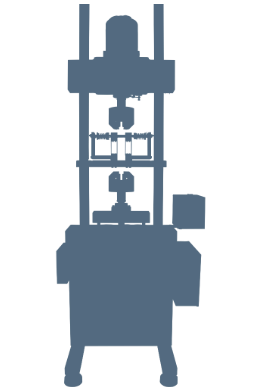
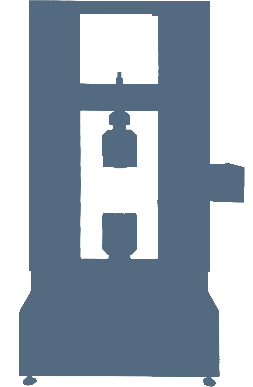
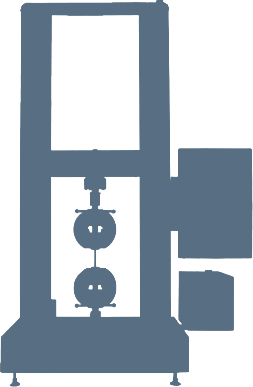
Three ADMET eXpert 2600 Universal Testing Machines

eXpert 7600 Single Column Universal Testing Machine

The eXpert 7600 Single Column Universal Testing Machine accommodates a wide variety of tensile, compression, flexure, peel, tear, puncture, and other mechanical tests. Standard and extended-travel configurations are available for materials with high elongation.

Best for: Thin films, elastomers, foams, packaging, and other low-force applications

Three ADMET eXpert 2600 Machines

eXpert 2600 Dual Column Universal Testing Machine

Available in capacities from 5-600kN, the eXpert 2600 Dual Column Universal Testing Machine provides the additional force capacity and frame stiffness required for rigid and reinforced polymers while maintaining the versatility to perform tensile, compression, flexural, and other tests.

Best for: Rigid plastics, reinforced plastics, and higher-force applications

Three ADMET eXpert 5600 machines

eXpert 5600 Universal Testing Machine

The eXpert 5600 Universal Testing Machine is a highly configurable universal testing machine designed for plastics and elastomer applications that require greater flexibility in testing setups. Its modular frame can accommodate unique specimen geometries, finished products, components, and specialized fixtures.

Best for: Finished products and components, unique specimen geometries, specialized fixtures, and custom testing configurations

three ADMET eXpert 5900 machines

eXpert 5900 ElectroDynamic Fatigue Testing Machine

The eXpert 5900 ElectroDynamic testing system is designed for dynamic and fatigue testing of plastics and elastomers. Its electrodynamic actuator provides precise cyclic loading for evaluating fatigue life, durability, hysteresis, and other dynamic material properties, while also supporting static tensile and compression testing on the same system.

Best for: Polymer fatigue and durability testing, cyclic tension and compression, hysteresis testing, and applications requiring both static and dynamic testing

three ADMET eXpert 6000 machines

eXpert 6000 Planar Biaxial Testing System

ADMET’s planar biaxial testing systems characterize the mechanical behavior of elastomers and other flexible materials under simultaneous loading in two directions. Built for research and advanced development environments, the system delivers precise, synchronized control of two orthogonal axes to accurately reproduce complex stress states encountered in real-world applications.

Best for: Evaluating anisotropy and FEA model validation of elastomers, flexible polymers, membranes, and other thin materials

Videos

This ADMET video demonstrates how to perform an ASTM D412 tensile strength test on rubber and elastomer materials, covering the full procedure from specimen preparation to results. It walks through procedure selection, loading the sample into tensile grips, attaching an extensometer to measure elongation, and running the test to failure at a controlled speed, with MTESTQuattro software capturing the stress-strain data and tensile calculations along the way.

Plastic 3 Point Bend Flexural Test – ASTM D790
Micro Tensile Strength Test of Plastic per ASTM D638
ASTM D2412 Plastic Pipe Compression Test

One System, Six Configurations

With the appropriate grips and fixtures, a single ADMET universal testing system can perform a wide range of plastics and elastomers tests.

Testing Materials Built To Bend, Stretch, and Endure

ADMET’s testing systems are built to handle the unique demands of plastics and elastomers, from delicate films to rugged composites. With precise strain-rate control, grips designed to prevent slipping and tearing, and environmental baths for real-world conditions, ADMET equips you to accurately test flexural strength, tear resistance, creep, and more.

Case Studies

Read more about how ADMET customers are using our machines today.

ADMET Planar Biaxial Seawater Bath Sample

Planar Biaxial Fatigue Testing with Seawater Bath

PLANAR-BIAXIAL

ADMET designed a customized planar biaxial fatigue testing system for a customer testing materials in a seawater bath.

ADMET Testing Machine pulling on Ridell helmet sample

Riddell Uses ADMET’s Multiple Plot and Graphics Capabilities

CONSUMER GOODS ∙ TENSILE

Riddell is now using ADMET’s eXpert 2611 dual column electromechanical testing machine equipped with the MTESTQuattro PC-based controller.

Frequently Asked Questions

The appropriate ASTM test method depends on the type of polymer material, specimen geometry, and mechanical property you need to measure.

For tensile testing, some of the most common standards include:

  • ASTM D638 for rigid and semi-rigid plastics, typically using molded or machined dog-bone specimens
  • ASTM D412 for vulcanized rubber and thermoplastic elastomers
  • ASTM D882 for thin plastic films and sheeting less than 1mm thick

Other standards may apply for flexure, compression, tear, friction, puncture, or other properties. ADMET can help determine the appropriate test method and configure the testing system, grips, fixtures, load cell, and extensometry around your material and application.

The right testing machine depends on the material, specimen geometry, expected force and elongation, test standard, and results you need to measure.

Most plastic tensile tests are performed using a universal testing machine equipped with an appropriately sized load cell, tensile grips, and an extensometer when direct strain measurement is required. ASTM D638, for example, calls for a UTM with fixed or self-aligning grips and force measurement, with extensometry required for certain calculations.

Grip selection depends on the material, specimen geometry, force, elongation, and test standard. Manual vise, pneumatic, eccentric roller, or wedge grip designs may be used depending on the application.

The goal is to securely hold the specimen without slippage, excessive deformation, or premature failure at the grip. Flexible films and high-elongation materials can be particularly sensitive to gripping conditions, making proper grip and jaw-face selection an important part of the test configuration.

Because thin films and soft rubber can tear or slip out of standard grips, ADMET offers several gripping solutions depending on the application. Pneumatic grips are self-aligning and apply even, adjustable clamping pressure, while wedge grips and eccentric roller grips increase clamping force as increases. These gripping methods are commonly used for applications such as ASTM D882 thin film and ASTM D412 elastomer tensile testing.

Elongation can be measured using an extensometer or, when permitted by the test method, the testing machine’s crosshead displacement. Rigid plastics with relatively low elongation can typically be measured with conventional extensometers, while highly extensible materials require a greater measurement range.

Elastomers, thin films, and other flexible plastics may reach elongations of 500%, 1,000%, or more before failure. For these applications, ADMET recommends non-contact or long-travel extensometers that can accurately measure strain through very large deformations.

The testing machine must also provide enough travel for the specimen to reach the required elongation or failure. ADMET can configure systems with extended travel and appropriate strain measurement solutions for applications ranging from rigid plastics to highly extensible elastomers.

Yes. A universal testing machine can often perform a wide variety of plastics and elastomer tests by interchanging the grips, fixtures, load cells, extensometers, and test methods.

For example, the same system may be configured for tensile, compression, flexure, peel, tear, puncture, and other mechanical tests. Differences in force, elongation, specimen geometry, and test speed should be considered when selecting the machine to ensure it can accommodate the full range of intended applications. ADMET’s engineers can help evaluate these requirements and recommend a system configuration that provides the versatility you need.

Yes. Because the mechanical properties of polymers can change significantly with temperature, plastics and elastomers are often tested under controlled environmental conditions.

ADMET universal testing systems can be integrated with environmental chambers to perform tensile, compression, flexure, and other mechanical tests at elevated or reduced temperatures. The appropriate chamber, grips, and extensometry depend on the required temperature range, material, and test method.

Many plastics and elastomers are tested in the actual media they’ll be exposed to in service, not just at temperature. ADMET offers environmental baths and chambers that can simulate immersion in water, saline, seawater, oils, or other fluids, often combined with heating/cooling circulation systems. This is common for applications like medical implants tested in saline, marine components tested in seawater, or O-rings and seals tested in process fluids or lubricants to evaluate how absorption, swelling, or softening affects mechanical properties over repeated cycles.

Downloads

Plastics Testing Brochure

Just Ask!

Any questions about mechanical testing equipment for plastics and elastomers?

spiral arrow graphic