
eXpert 5600
Modular Universal Testing System with Force Capacities up to 10 kN

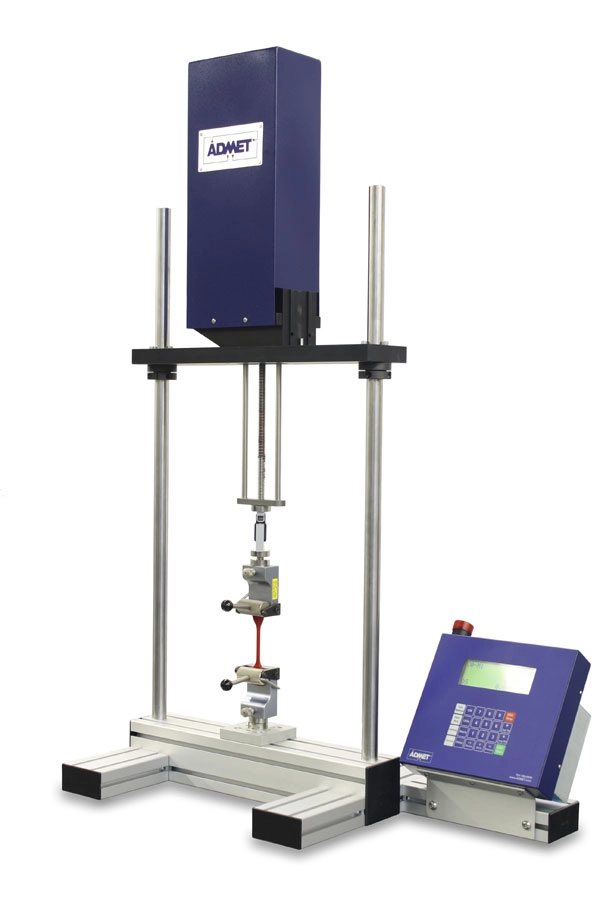
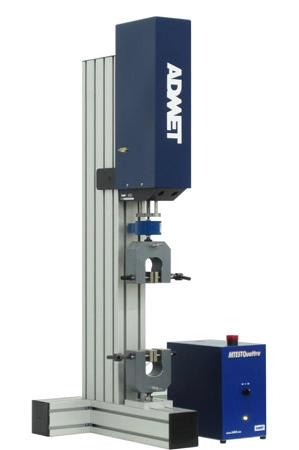
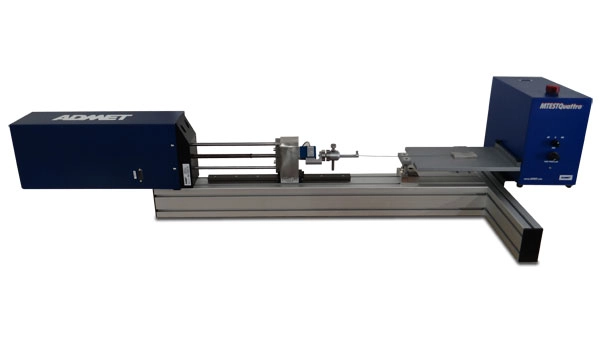
The eXpert 5600 Series is a modular universal testing system designed for flexible static materials and component testing in laboratories and production QA environments. With load capacities from 1 kN to 10 kN, the system supports tensile, compression, and flexural testing across a wide range of materials including metals, plastics, composites, and biomedical specimens. Its modular design allows the platform to scale with evolving test requirements, making it well suited for research, product development, and quality control applications that demand accurate load measurement, repeatable results, and efficient use of lab space.


Modular Design,
Precise Testing
At the core of the eXpert 5600 Series is a rigid, mechanically stable test frame engineered to maintain alignment and load accuracy during static tensile, compression, and flexural testing. Structural rigidity is critical for producing repeatable results, particularly when testing materials or components that are sensitive to misalignment, grip compliance, or frame deflection. The system’s actuator and load measurement design support smooth, controlled loading across the full operating range, enabling reliable execution of standardized static test methods.
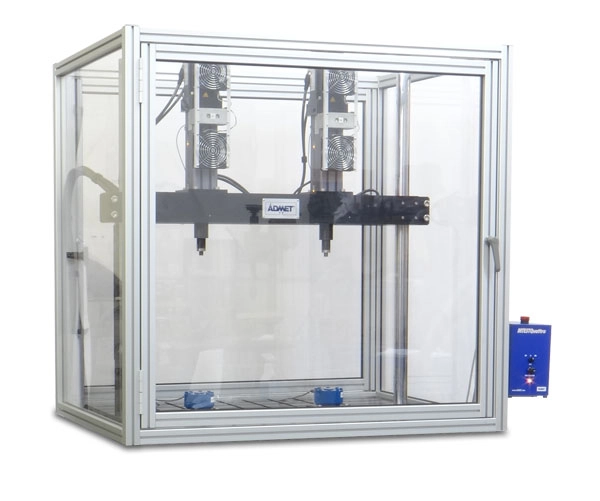
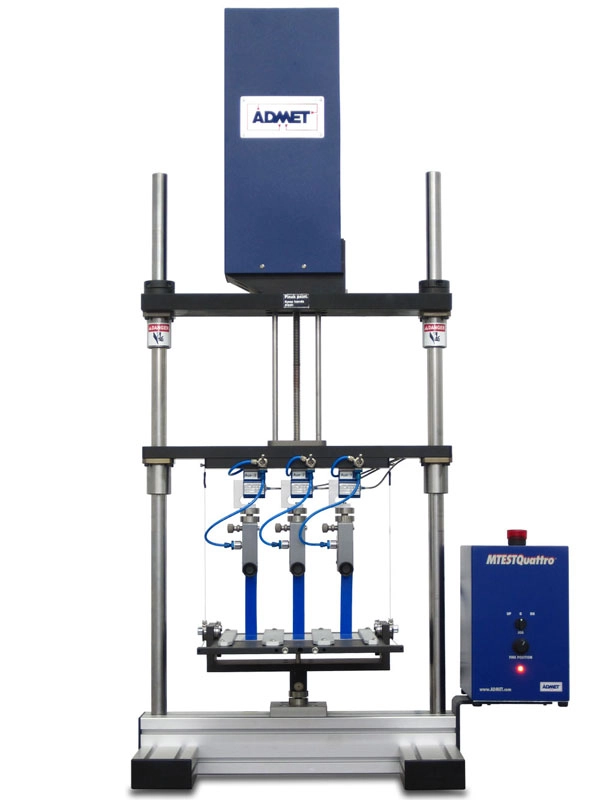
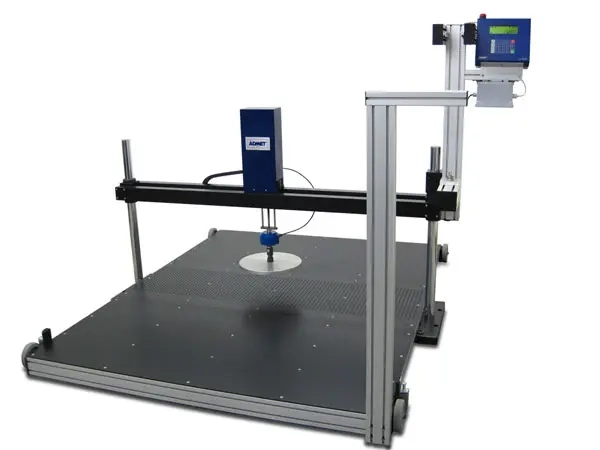
The modular architecture of the eXpert 5600 Series allows laboratories to support a wide range of test setups within a single platform. Different frame sizes, actuators, and fixturing solutions can be incorporated to accommodate varying specimen geometries, load requirements, and test standards while maintaining a consistent control platform and operator experience. By separating core load frame performance from application-specific hardware, the system supports long-term use across evolving testing programs, helping laboratories extend capability without sacrificing data consistency or operational continuity.
Rigid Load Frame That Minimizes Deflection and Misalignment
The eXpert 5600 Series uses a mechanically rigid load frame designed to maintain specimen alignment and minimize frame deflection during static tensile, compression, and flexural testing. This rigidity reduces unintended compliance in the test system, helping ensure that applied loads are transferred directly to the specimen rather than absorbed by frame movement. The result is more accurate force–displacement data, improved repeatability, and reduced variability when testing materials or components that are sensitive to alignment or grip compliance.
Interchangeable Frames and Actuators Within One System Family
The eXpert 5600 Series is built around a modular system architecture that supports multiple frame sizes, actuators, and fixturing solutions within the same platform. This allows laboratories to test different specimen sizes, materials, and load ranges without moving to an entirely different testing system. By using common controls and software across setups, users can expand testing capability while maintaining consistent workflows, operator familiarity, and data formats.
Closed-Loop Load Control Optimized for Static Testing
The system employs closed-loop load control to apply force smoothly and consistently throughout static tests, including during initial loading, hold periods, and specimen failure. This control approach helps prevent overshoot and load instability, which are common sources of error in static materials testing. Stable load application improves data quality, supports compliance with ASTM and ISO static test methods, and enables clearer interpretation of material behavior and failure characteristics.





| MODEL | 5601, 5602, 5603, 5604, 5605 |
|---|---|
| Load Capacity | 225 – 2,000 lbf 1 – 8.9 kN 100 – 907 kgf |
| Maximum Speed | 5 – 40 in/min 127 – 1,016 mm/min |
| Total Stroke | 12 in 305 mm |
| Total Stroke | 10 in 254 mm |
Advanced Control Systems

ADMET Materials Testing Systems are built around closed-loop servo control, enabling precise regulation of load, position, and strain throughout a test. MTESTQuattro and eP2 are designed to serve different testing needs, from software-driven, highly configurable test environments to streamlined digital control for routine, high-volume work. MTESTQuattro is typically selected when advanced test sequencing, extensive data analysis, or custom methods are required, while eP2 is well suited for standardized tests where simplicity and throughput are priorities. Both platforms deliver reliable servo performance and real-time data acquisition, allowing users to choose the level of control and software capability needed for their applications.
MTESTQuattro
MTESTQuattro is the PC-based controller and materials testing software platform behind most ADMET materials testing systems. It delivers precise closed-loop control with an 8 kHz servo update rate, high-resolution data acquisition, and built-in ASTM/ISO test workflows. The blue controller manages real-time machine motion and translates sensor inputs, while the software handles test setup, execution, analysis, and reporting. Together, they enable repeatable tensile, compression, flexural, fatigue, and custom test methods for both routine QA and advanced R&D, making MTESTQuattro a scalable solution for new test systems and retrofit applications alike.
eP2 Digital Controller
The eP2 is a standalone closed-loop servo controller for mechanical testing machines, providing direct load and position control at the frame without relying on a PC. Tests are configured on the controller using preset methods and numeric setpoints, with control loops running up to 1 kHz for stable force, position, and strain control. During the test, data is logged internally and then transferred to GaugeSafe software via USB for plotting, calculations, and reporting. The result is a turnkey testing core with fast setup, repeatable control, and a clean data path from actuator to report.

Precise Control
Both control platforms use closed-loop servo control to regulate load, position, and strain throughout a test. High update rates and responsive feedback help maintain stable loading during ramps, holds, and cyclic profiles. This level of control supports accurate, repeatable results across a wide range of materials testing applications. Consistent control behavior also reduces test-to-test variability when running long series or multi-specimen programs.

Intuitive Test Setup
ADMET control systems are designed to streamline test setup while maintaining flexibility. Standard test methods can be configured quickly, and custom test sequences can be built as needed using the testing software. Clear workflows reduce setup time, limit operator error, and support consistent testing across users and shifts. Saved test configurations allow validated methods to be reused without rebuilding procedures for each run.

Powerful Analysis and Reporting
Test data is captured in real time and processed using built-in materials testing software aligned with ASTM and ISO requirements. Results can be reviewed, compared, and exported in standard formats for traceability. This supports audit-ready documentation for both research and quality-focused testing environments. Automated calculations and standardized reports help ensure results are interpreted consistently across projects and teams.
Videos
Long-term Value
With every purchase, ADMET offers free technical and application support for the life of your testing system. Whether you’re faced with a technical challenge or need an outside perspective on test design, we will partner with you to make your testing easy and successful.

Calibration Services
ADMET offers calibration services on new materials testing systems both before shipment and as a field service for any customer in need. Although ADMET utilizes the highest quality equipment available, regular calibration ensures that these components perform as required so the results generated can be trusted with confidence. A list of ADMET’s accredited calibration scope is available via the link.
Retrofit Capabilities
ADMET can extend the life of an aging testing system of any brand with our retrofit services. We often upgrade older systems with modern controllers, advanced software, and new fixturing to meet today’s materials testing needs. This extends lifespan, improves functionality, and improves the lifetime value of your investment. For a list of our retrofit capabilities, visit our retrofit webpage.

Downloads
eXpert 5600 Brochure